For businesses
How to start a real estate podcast
By the team at The Cast Studio · Updated · 5 min read
In short
A real estate podcast works when it answers the questions buyers and sellers in your area already ask: market updates, how buying and selling work, and conversations with lenders, inspectors and local business owners. Record several episodes in one studio session, cut clips from each, keep a steady schedule, and follow your brokerage's advertising rules.
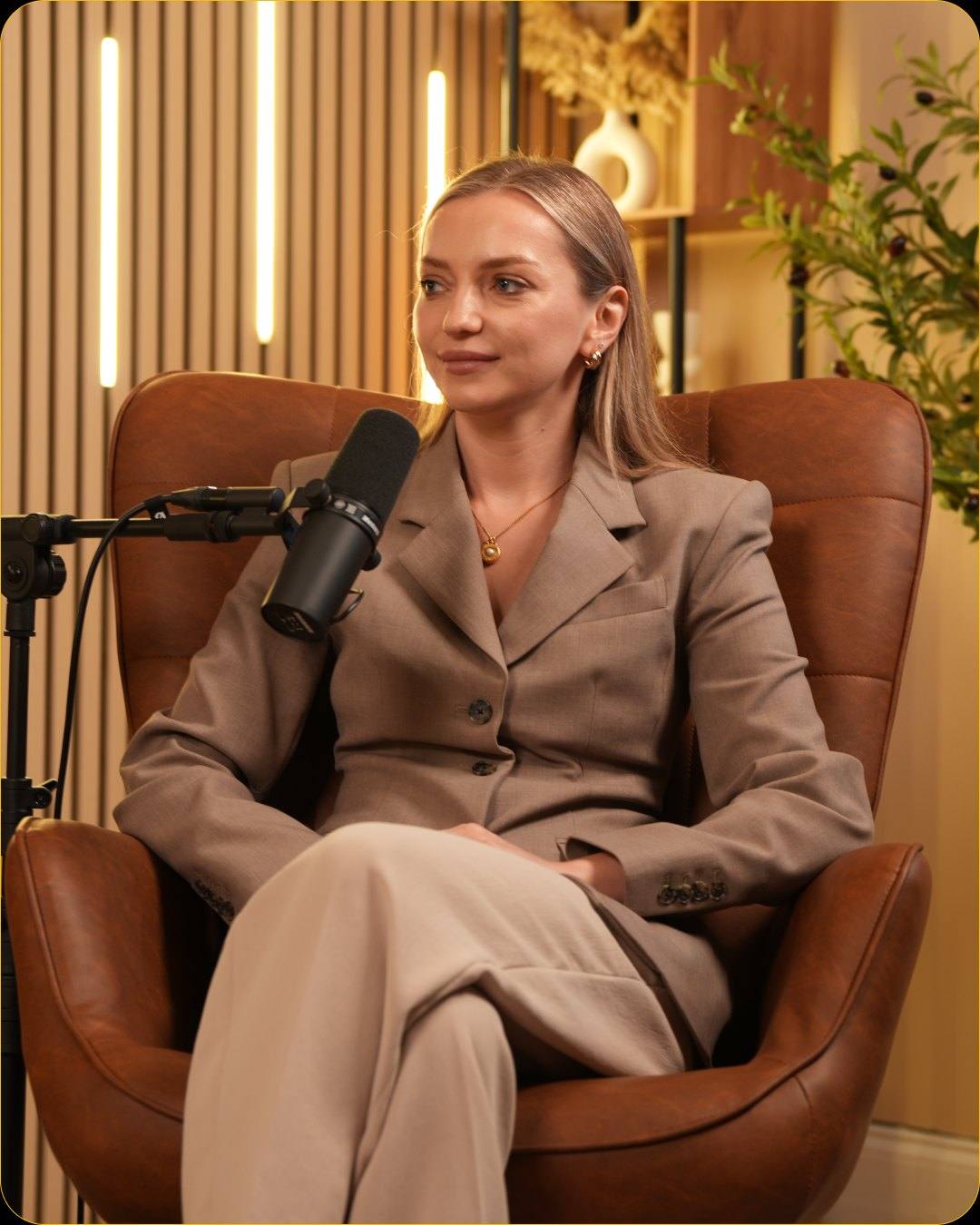
Real estate is a trust business, and a podcast or video series lets people get to know you before they ever book a showing. This guide covers the formats that work, who to invite and how to record a month of content in one session.
Why do real estate agents start podcasts?
Agents start podcasts to earn trust at scale. A buyer who has watched you explain the market for twenty minutes already knows how you think, and a seller who has heard you answer their exact question is more likely to call you than a stranger.
A show also does work beyond the episode:
- It proves local knowledge. Talking about your market every month shows you follow it closely.
- It feeds your other channels. One episode becomes clips, posts, a newsletter section and a page on your website.
- It builds referral relationships. Inviting a lender, an inspector or an attorney to your show is a natural way to work together, and they share the episode with their own audience.
None of this happens after one episode. Plan a format you can keep up for at least a few months before you judge it.
What formats work for a real estate podcast?
The formats that work answer real client questions or put a trusted local voice in front of the camera. Pick one or two and repeat them, so viewers know what to expect.
| Format | What it covers | How often |
|---|---|---|
| Market update | Prices, inventory and rates in your area, explained in plain words | Monthly |
| Buyer or seller Q&A | One client question per episode, answered in depth | Weekly or every two weeks |
| Partner interview | A lender, inspector, attorney, insurance agent or contractor explains their part of the deal | Monthly |
| Local business spotlight | A restaurant owner, school leader or gym owner talks about the neighborhood | Monthly |
| Investor conversation | Rental math, renovation plans and lessons from local investors | As guests allow |
| Deal story | How a difficult purchase or sale came together, shared with the client's permission | Occasionally |
For more episode ideas by audience and format, see our list of podcast ideas.
Who should you invite as guests?
Invite people whose clients overlap with yours and who explain their work clearly. Good first guests are the professionals you already send clients to:
- Mortgage lenders and brokers on pre-approval, rates and down payments.
- Home inspectors on the issues that come up most and how to read a report.
- Real estate attorneys and title agents on closings and contracts.
- Insurance agents on coverage questions that matter in Florida.
- Contractors, stagers and photographers on preparing a home for sale.
- Local business owners who can talk about life in the neighborhood.
Send each guest three or four questions in advance, agree on the main points, and promise them a clip they can post. A guest who looks and sounds good on camera is a guest who shares the episode.
How do you record a month of content in one session?
Book one block of studio time and record several short episodes back to back, with the camera and lighting already set. Batching saves travel and setup, and you leave with weeks of material.
A two-hour booking can hold a 15-minute market update, two Q&A episodes of about 10 minutes each, a 25 to 30 minute partner interview with a lender or inspector, and a few short takes straight to camera. Our guide on how to start a podcast for your business covers the general recording order and how to schedule guests an hour apart.
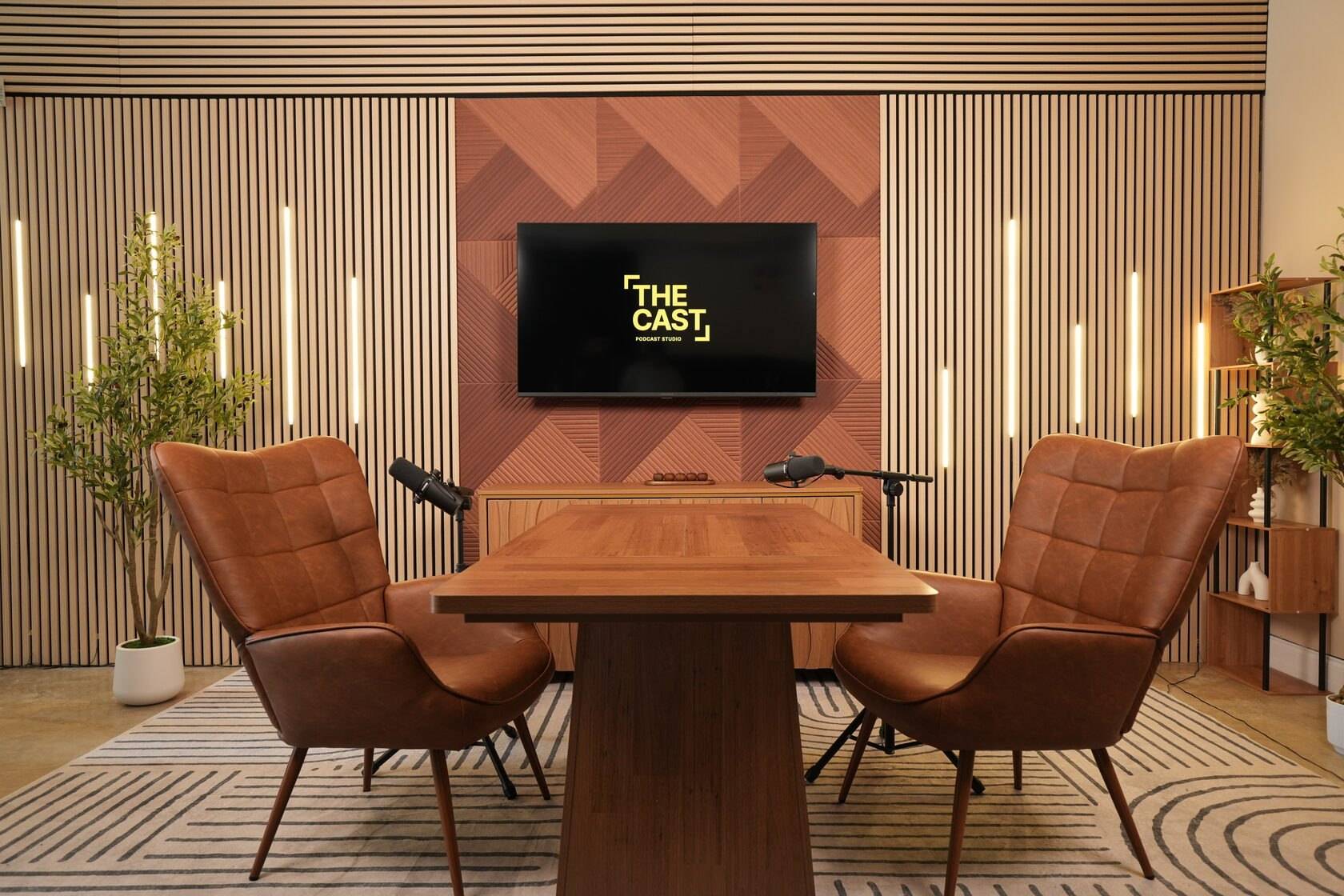
At The Cast Studio, the classic interview set with two leather armchairs suits one-on-one conversations, and the round-table set suits panels with several guests. Studio Recording at $250 per hour gives you a full crew, three 4K angles, thumbnail and guest photos, and raw files within 24 hours for your editor. Studio Recording + Enhanced Edit at $455 per hour adds a finished multicam edit with your logo, lower thirds and name titles. All prices are on the podcast studio rental page.
What do agents say about recording at The Cast Studio?
Here is what two real estate agents and the CEO of DMD Investments said about recording at the studio, in their own words:
"Super clean studio, amazing sound quality! Perfect lighting, and very supportive team"
Yana Sytnychenko, Real Estate Agent | $50M+ closed deals
"Everything was ready when we arrived. We just sat down and started talking"
Denys, Commercial Real Estate Agent
"Honestly one of the easiest podcast recordings I’ve ever done."
David Rodriguez, CEO DMD Investments | Top Producer
The page for real estate agents has more on formats, sets and packages for agents.
Should you record in a studio or at home?
Record at home if you want to test the idea cheaply and you are comfortable with the equipment; use a studio when the show represents your brand and you want guests to look and sound good without you running the cameras. You can also do both: test a few episodes at home, then record the flagship episodes, such as market updates and partner interviews, in a studio. Our guide on how to choose a podcast studio in Fort Lauderdale lists what to compare.
What rules should you keep in mind?
Treat every episode as advertising, because it promotes you and your brokerage. A few rules apply to most agents:
- Brokerage and license information. Ask your broker what must appear on screen and in the description.
- Fair housing. Talk about homes, prices, amenities and the market, not about who should or should not live in a neighborhood. Fair housing rules apply to video as much as to listings.
- Client permission. Get written consent before you share a client's story, address or photos.
- Music and footage. Use only music and images you have the rights to.
This is general information, not legal advice. When in doubt, ask your broker or an attorney.
How do you turn episodes into clips and posts?
Pull two to four short moments from each short episode, or up to six from a longer interview: a strong answer, a surprising number from your market update, a guest's strongest tip. Post them where your clients scroll, and link each one to the full episode. Our guide to podcast clips shows how to plan them while you record.
Plan your first real estate episode in the studio: book a session, or come see the sets on a free tour.
Frequently asked questions
Is a podcast worth it for a real estate agent?
It can be, if you treat it as a long-term way to build trust rather than a lead machine. A show lets people in your market hear how you think before they call, gives you material for social media and newsletters, and gives you a reason to invite lenders, inspectors and other local professionals. It takes a schedule you can keep.
What should a real estate podcast be about?
Your local market and the questions clients already ask you: what homes cost in your area, how buying and selling work, what to fix before listing, how financing works and what each neighborhood offers. Interviews with lenders, inspectors, attorneys and local business owners add variety and expertise.
How long should a real estate podcast episode be?
There is no fixed rule. A focused 15 to 30 minute episode that answers one question is easier to record, edit and watch than a long, loose conversation, and it still gives you several short clips for social media.
Do I need my brokerage's approval to start a podcast?
Ask before you publish. Brokerage policies and state advertising rules usually cover how agents present themselves, including license and brokerage information, so ask your broker what must appear in the video and the description. This is general information, not legal advice.
How much does it cost to record a real estate podcast in a studio?
At The Cast Studio in Fort Lauderdale, prices are per hour: $199 for one cinematic 4K angle, $250 for a full crew with three 4K angles and raw files within 24 hours, and $455 with a finished multicam edit. Recording several episodes in one booking spreads the setup over more content.
Written by the team at The Cast Studio, a podcast and video studio at 801 NE 2nd Ave, Ste 120, Fort Lauderdale, FL 33304. Facts and prices are checked on the date shown above. About the studio.