For businesses
How to start a podcast for your business
By the team at The Cast Studio · Updated · 5 min read
In short
A business podcast earns its place when it serves one clear goal, such as trust before the first sales call, partnerships, hiring or content for your channels, and one specific audience. Pick a format you can repeat, record several episodes per session, turn each into clips and posts, and judge it by the conversations it starts, not by downloads alone.
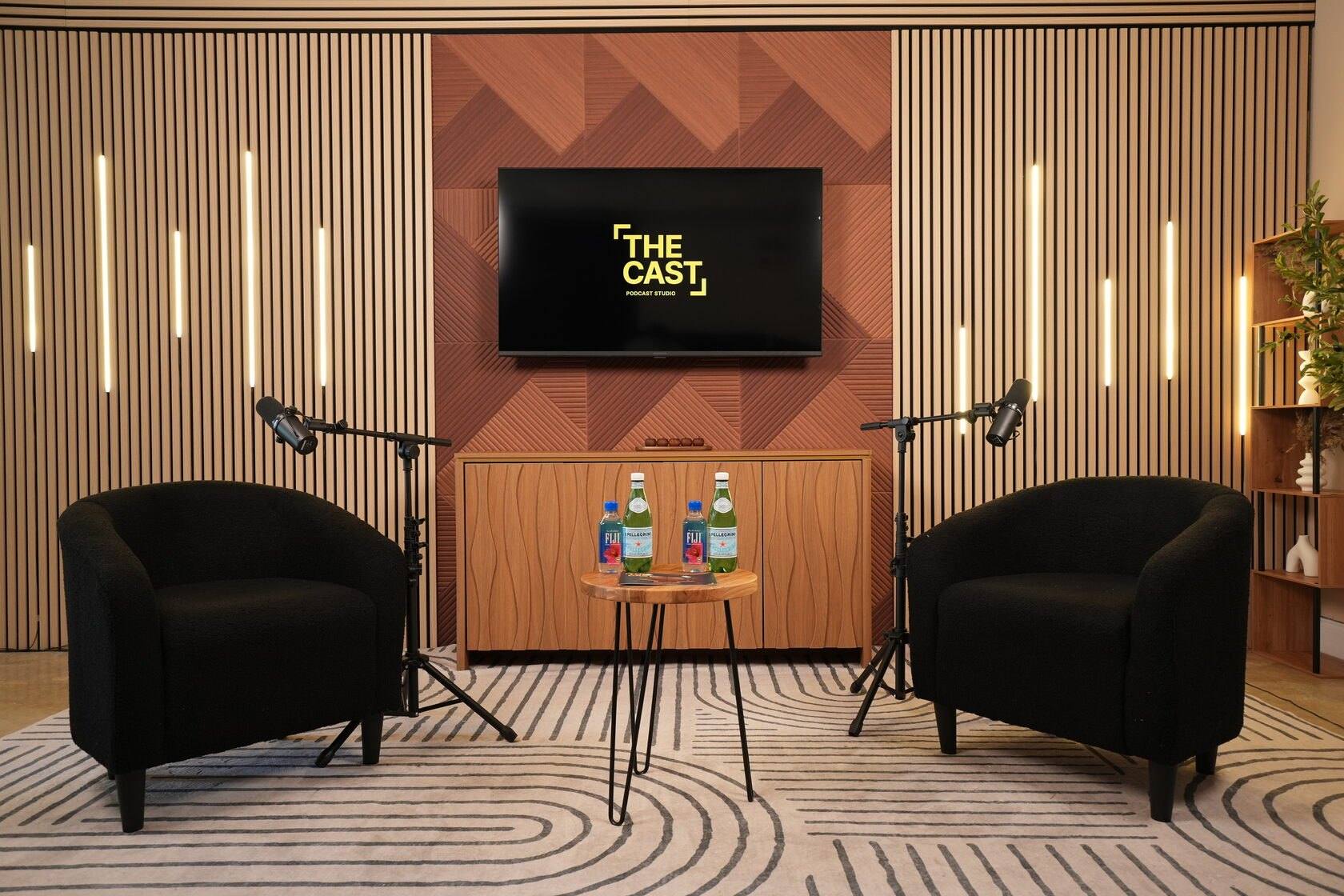
Companies of every size run podcasts and video series, from solo founders to firms with a marketing team. The ones that keep going are not the ones with the most equipment; they are the ones that know what the show is for. This guide covers the goals a business podcast can serve, formats that work, production choices and how to measure the result.
Why do businesses start podcasts?
Businesses start podcasts to build trust at scale. A prospect who has watched you explain a problem for twenty minutes arrives at the first meeting already knowing how you think. Beyond that, a show can do several jobs at once:
- Shorten the sales conversation. Send an episode that answers a prospect's question before the call.
- Open doors to partners. Inviting a potential partner or client as a guest is a natural first step to working together.
- Feed every other channel. One episode becomes clips, posts, a newsletter and a page on your website.
- Show the people behind the brand. Hiring and retention benefit when candidates can hear the team.
- Build expertise in public. Regular episodes on your field make you the person people think of for that topic.
Which goal should your podcast serve?
Choose one main goal and let it shape the format, guests and measurement. A show that tries to do everything ends up doing nothing well.
| Main goal | Format that fits | Guests | What to measure |
|---|---|---|---|
| Trust before the first call | Expert Q&A, solo explainers | Your team, clients | Episodes sent by sales, mentions in calls |
| Partnerships and referrals | Interviews | Potential partners, peers | Guests who became partners |
| Content for your channels | Interviews plus clips | Experts your audience follows | Clip reach, newsletter sign-ups |
| Hiring and culture | Team conversations | Employees, leaders | Candidates who mention the show |
| Thought leadership | Panels, debates, industry news | Recognized voices in your field | Invitations to speak, inbound press |
Which formats work for a business podcast?
The formats that work put your customers' questions or other people's expertise at the center, not your product. The most reliable ones:
- Founder or expert interviews: you interview people your customers want to hear from.
- Customer stories: a client explains the problem they had and how they solved it, with your role as part of the story, not all of it.
- Expert Q&A: one customer question per episode, answered in depth.
- Panels: three or four voices on one industry question.
- Behind the business: how you make decisions, price, hire and handle mistakes.
For more, see our list of podcast ideas for businesses and creators.
How do you plan a business podcast?
Plan it like a product launch: audience, promise, format, schedule and a first season. A short planning checklist:
- Audience: describe the one person the show is for, by role and situation.
- Promise: finish the sentence "Every episode helps [audience] with [problem]."
- Format: choose one main format and one occasional one.
- Season: plan 8 to 10 episodes as a first season, with a clear end date.
- Guests: list 20 people you would like to invite and contact the first five.
- Approvals: in regulated fields such as finance, health or real estate (our real estate podcast guide lists the rules agents keep in mind), agree with compliance what can and cannot be said.
- Distribution: decide where each episode goes: YouTube, podcast apps, your website, newsletter and sales follow-ups.
Should you produce it yourself, rent a studio or hire an agency?
Produce it yourself if you have time and want to learn, rent a studio if you want professional video without owning equipment, and hire an agency if you want strategy, guest booking and distribution handled too.
| Option | What you get | What it costs you |
|---|---|---|
| Do it yourself | Full control, equipment you own | Equipment, a room, editing time and a learning curve |
| Rent a studio by the hour | Designed sets, cameras, lights, sound, often a crew | Hourly rate; you plan the show and handle publishing |
| Hire an agency | Strategy, booking, production, distribution | A monthly fee, usually with a contract |
At The Cast Studio in Fort Lauderdale, studio time is sold by the hour with three packages. Studio Essentials at $199 records one cinematic 4K angle with an on-site tech assist. Studio Recording at $250 adds a full crew, three 4K angles, thumbnail and guest photos, and raw files within 24 hours. Studio Recording + Enhanced Edit at $455 adds a finished multicam edit with your logo, lower thirds and name titles. For the wider market, see what a podcast studio costs in Fort Lauderdale, and for companies that need studio-made video beyond podcasts, the studio video production page.
How do you record a month of episodes in one session?
Book one block of studio time and record three or four episodes back to back. Setup happens once, guests can be scheduled an hour apart, and you leave with a month of material. A practical order:
- Solo or host-led episodes first, while you are fresh.
- Guest interviews next, one per slot, with a short break between them.
- Short straight-to-camera takes at the end: a show trailer, intros and calls to action for clips.
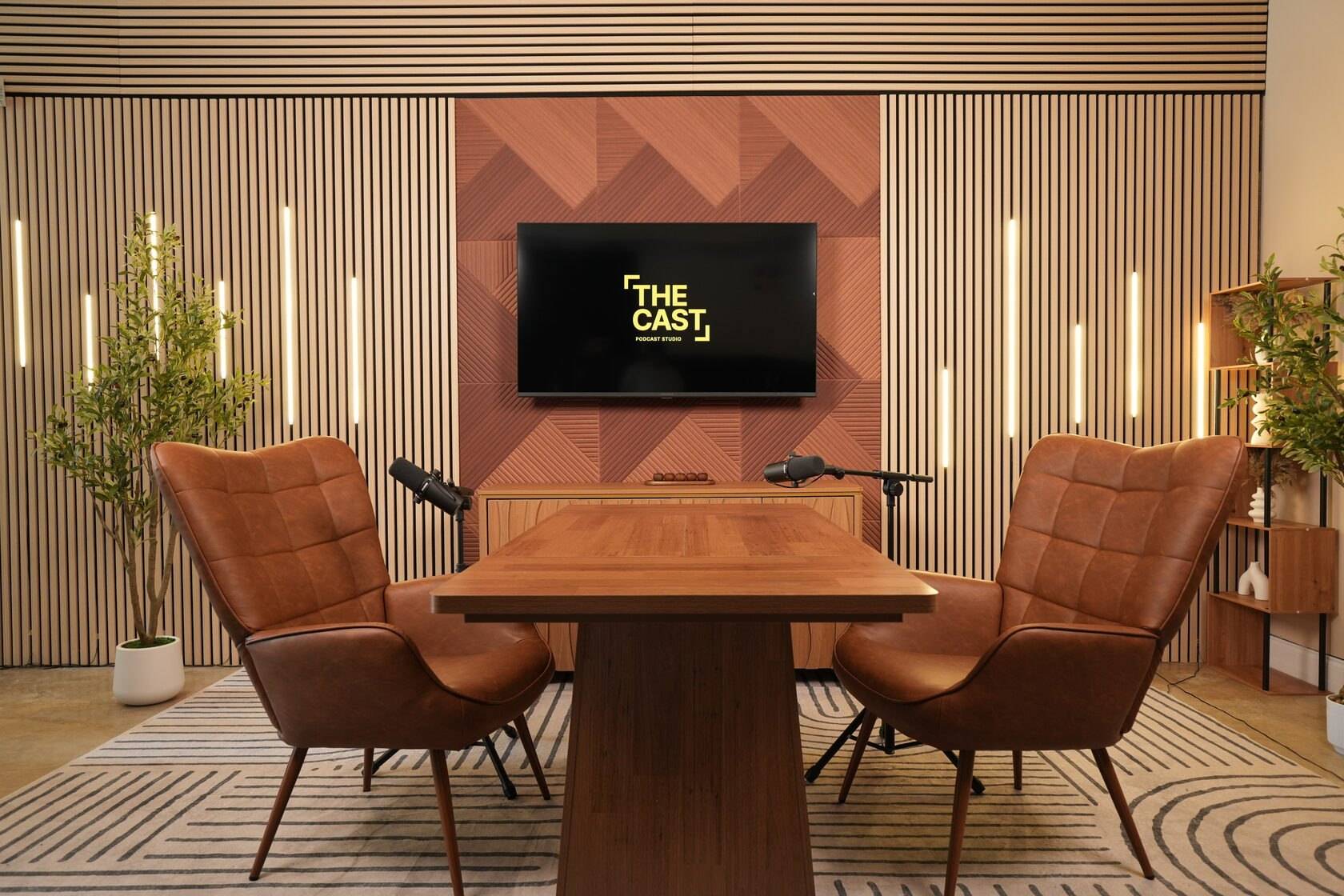
Pick the set by format: armchairs for one-on-one interviews, the round table for panels, a sofa for relaxed conversations. All six sets are on the podcast sets page.
How do you turn one episode into a month of content?
Plan the distribution before you record. Each episode can become a full video on YouTube, an audio episode in podcast apps, three to six clips, a quote graphic with the guest's photo, a newsletter section and a link your sales team sends to prospects. Our guide to podcast clips has a four-week plan for one episode.
How do you know if your business podcast is working?
Measure what matters to the goal you chose, not only downloads. Useful signals:
- Prospects or clients who mention an episode.
- Guests who became partners, referrers or clients.
- Newsletter sign-ups and website visits from links in episode descriptions (use UTM tags).
- How often your team shares episodes in sales follow-ups.
- Invitations to speak or appear on other shows.
Give it a full season before you judge. Most of what a show does for a business builds slowly.
What mistakes should you avoid?
The common ones are easy to avoid once you know them:
- Talking about yourself in every episode. Be useful first; the brand follows.
- A topic that is too broad for anyone to recognize as theirs.
- An irregular schedule that loses viewers between episodes.
- No distribution plan, so good episodes reach only the people who already follow you.
- Guests chosen for fame rather than fit with your audience.
- Stopping after three episodes, before the show has a chance to work.
The page for business owners covers packages, sets and formats for founders and companies recording at The Cast Studio.
Plan your first season in the studio: book a session, or see the six sets on a free tour first.
Frequently asked questions
Is a podcast good for business?
It can be, when it is tied to a goal. A show lets prospects hear how you think before they meet you, gives your team material for sales and social media, and gives you a reason to invite partners and clients. It takes months of consistent episodes, so treat it as a long-term channel, not a quick source of leads.
What is a branded podcast?
A show made by a company about topics its customers care about, rather than about the company itself. It is usually hosted by a founder or a team member and features clients, partners and experts. The brand gains trust by being useful, not by advertising.
How much does a business podcast cost to produce?
It depends on who does the work. Recording yourself costs equipment and time; a studio charges by the hour; an agency charges a monthly fee for strategy and production. At The Cast Studio, studio time is $199, $250 or $455 per hour depending on the package, and several episodes can be recorded in one booking.
How often should a business publish podcast episodes?
As often as you can keep up for a year. Weekly or every two weeks works for most teams; monthly can work if each episode is strong and you post clips in between. A steady schedule matters more than a high frequency.
How do you measure a business podcast?
Look beyond downloads. Count sales conversations where the show came up, guests who became partners or clients, newsletter sign-ups and website visits from episode links, and how often your team sends episodes to prospects. Ask new clients how they heard about you and add the show as an answer.
Written by the team at The Cast Studio, a podcast and video studio at 801 NE 2nd Ave, Ste 120, Fort Lauderdale, FL 33304. Facts and prices are checked on the date shown above. About the studio.